Slope Refresh With Fresh Soil, Bark, and Gopher Wire
Sloped planting areas are one of those things that can quietly go downhill - pun intended. Old soil gets compacted and depleted. Bark breaks down into nothing. Gophers tunnel through and wreck root systems. Before long, what was once a clean hillside looks rough and patchy, and nothing you plant seems to thrive.
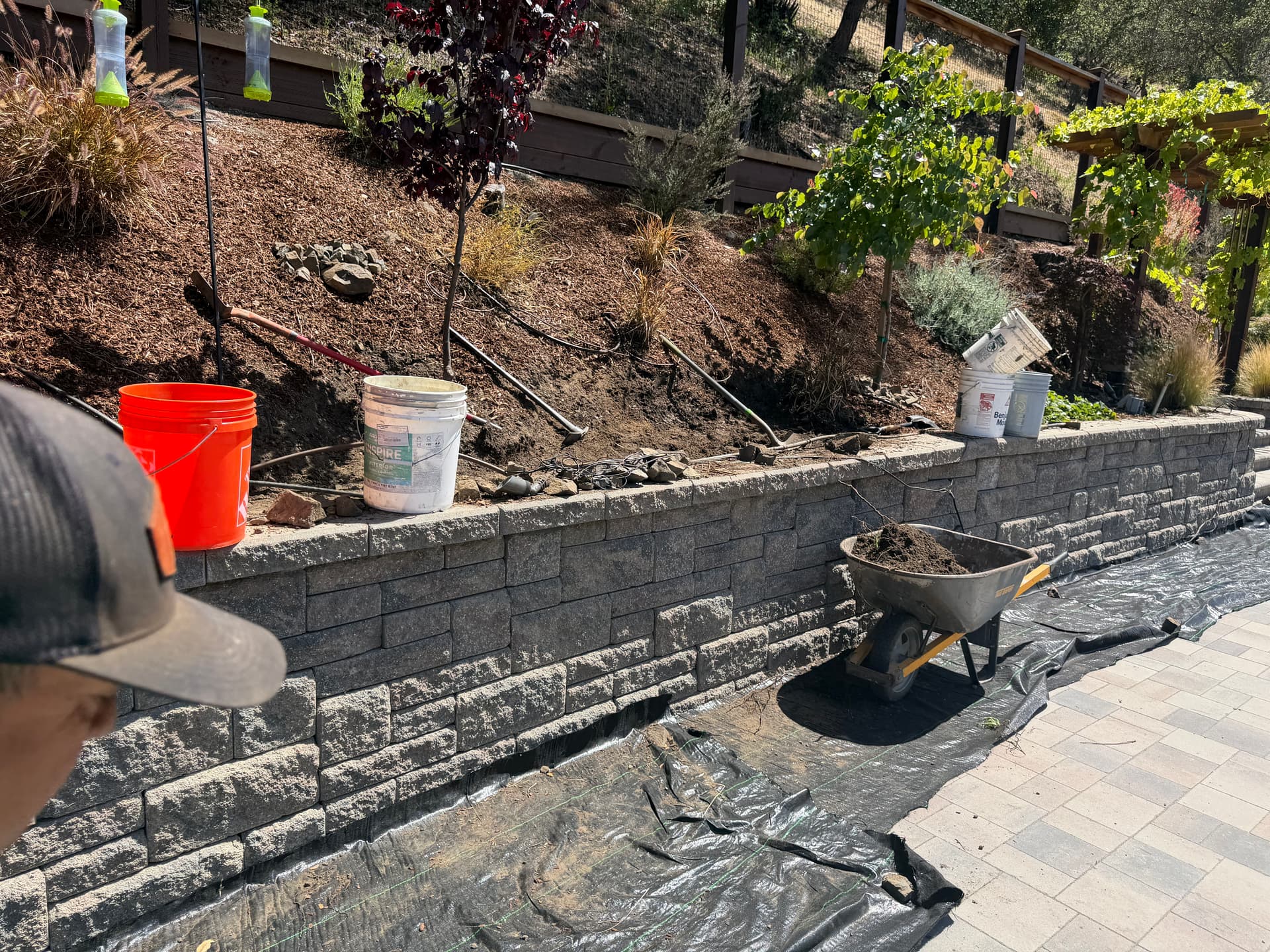
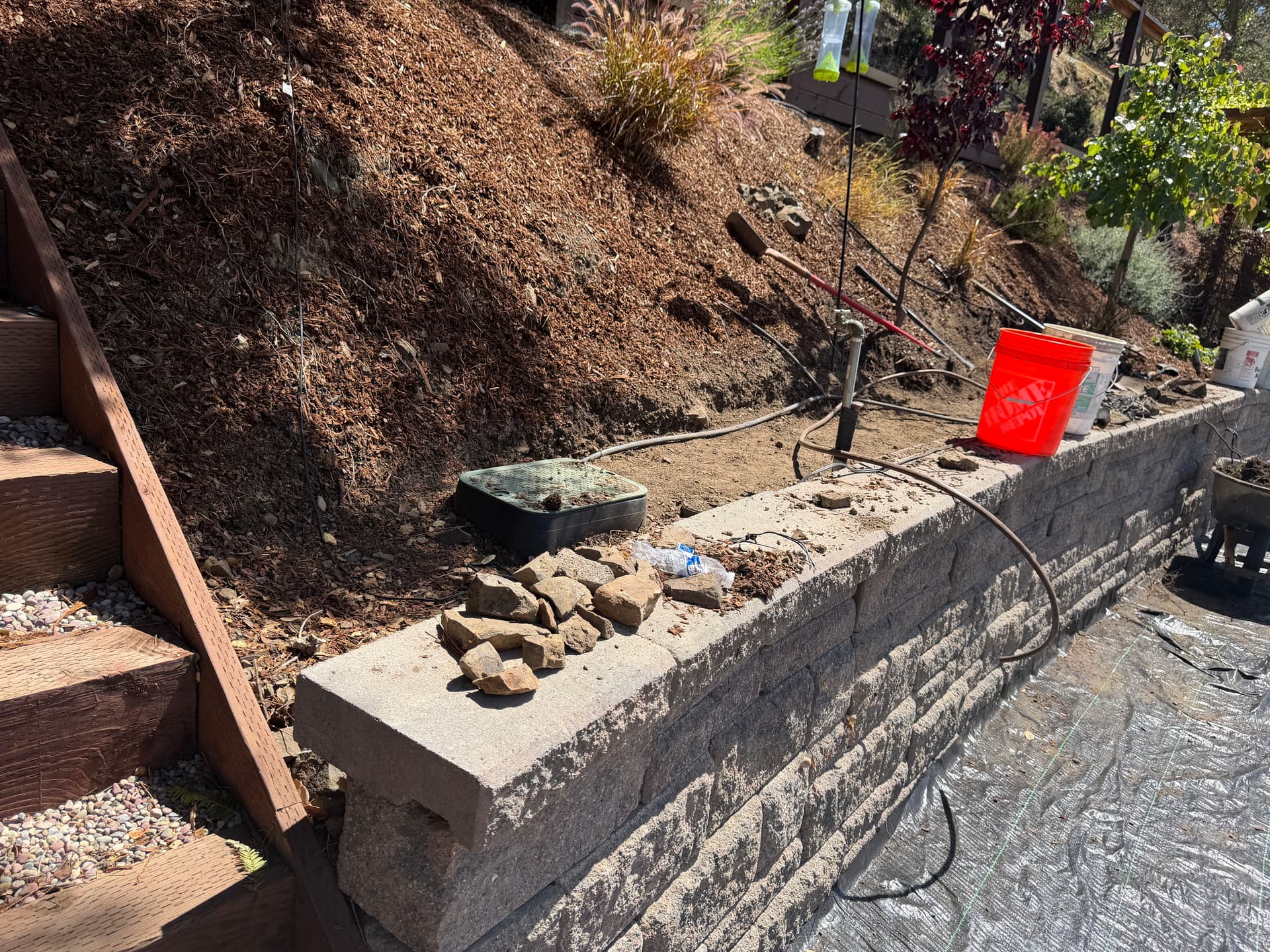
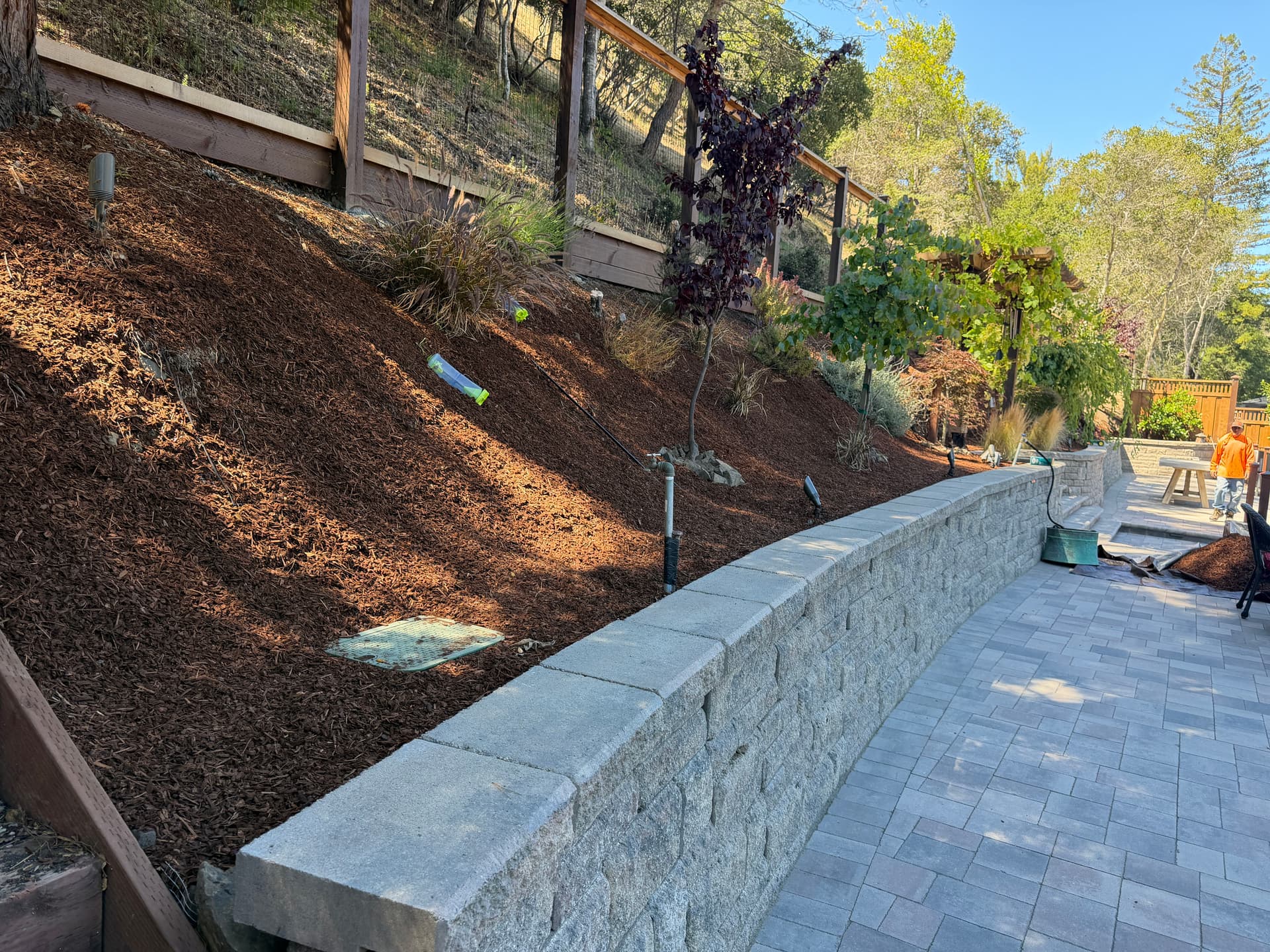
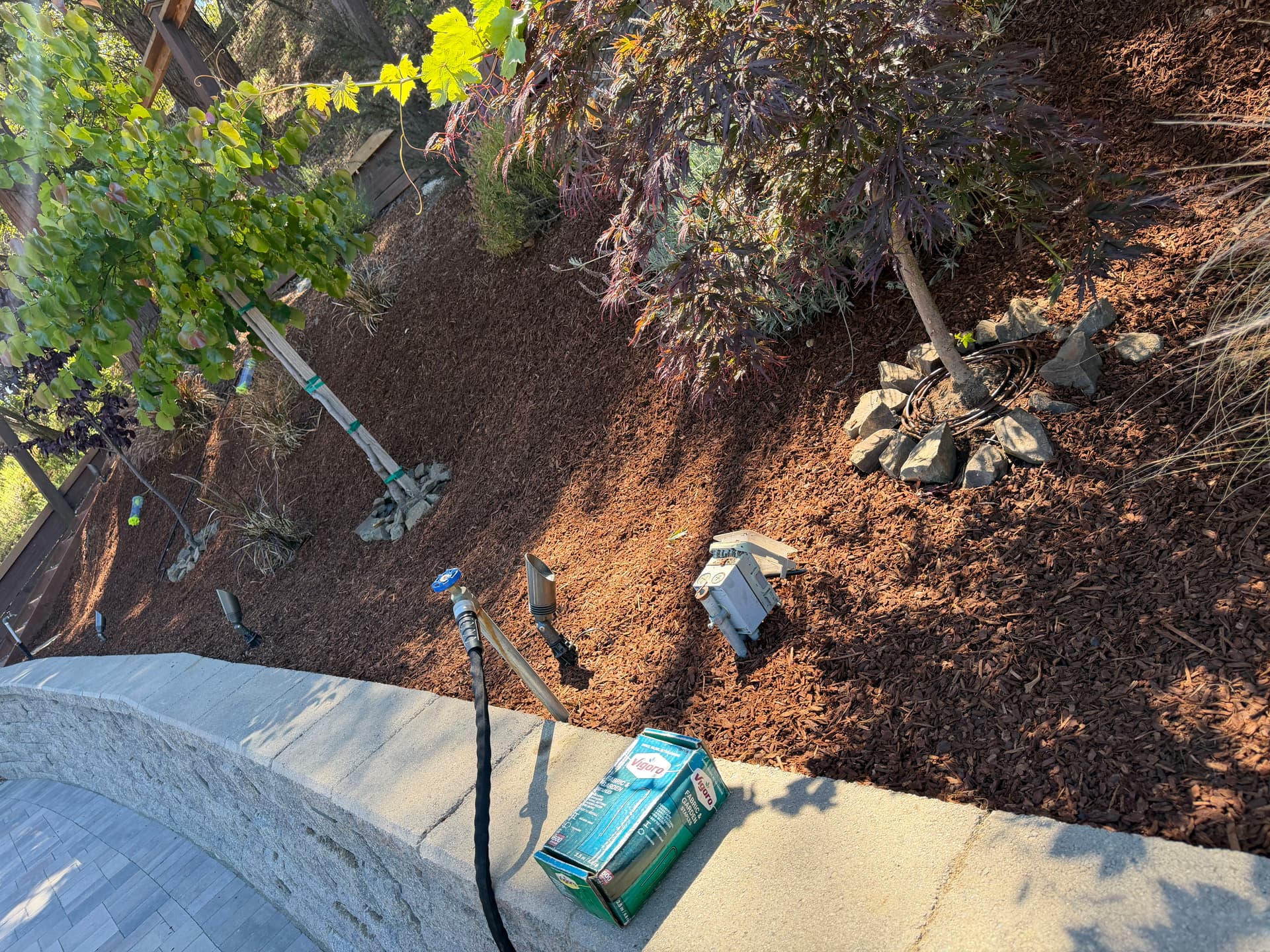
Here's what we were working with on this one - a sloped bed sitting above a block retaining wall that had seen better days. The soil was tired, the bark was gone, and there was zero protection against gophers. We stripped it all out and started fresh. That means pulling the old material, bringing in new topsoil to give plants a solid foundation, laying gopher wire underneath to protect the planting area, and finishing it off with a clean layer of mini fir bark.
The before-and-after difference on a job like this is hard to overstate. It's not just about looks, though the fresh bark and clean slope make a huge visual impact. It's also about function. Good soil and proper ground cover help with moisture retention, erosion control, and giving new plants the best possible start.
We also tied in irrigation work alongside the slope refresh - you can see the drip lines and valve boxes built into the bed. That's the kind of detail that matters long-term. A beautiful planting area doesn't stay that way without the right water delivery, especially on a slope where water runs off fast if the system isn't dialed in. Getting the irrigation right from the start saves a lot of headaches down the road.
If you've got a slope or planting bed that's starting to look rough, sometimes all it takes is going back to basics - fresh soil, proper protection, quality bark, and the right irrigation setup. It's the kind of work that pays off every single season.